Together with my friend Arturo, I renovated this small apartment in the Barceloneta district. Just two minutes from the beach and five minutes from the old town, Barceloneta is actually a small village with a market hall, bakery, hardware store, and small, cozy tapas bars and restaurants. Few tourists stray into this somewhat hidden former fishing district between Port Vell and the 1992 Olympic port!
I am happy to make the apartment available for private use. To cover the monthly costs for maintenance, electricity, gas, water, sewage, and neighborhood tax, I have set a daily rate. If the price is too high for you, please let me know. We will find a solution!
Informations Info on leaflet (PDF)
Here are a few impressions of the small apartment, the surrounding area, and memories of its history and renovation process:
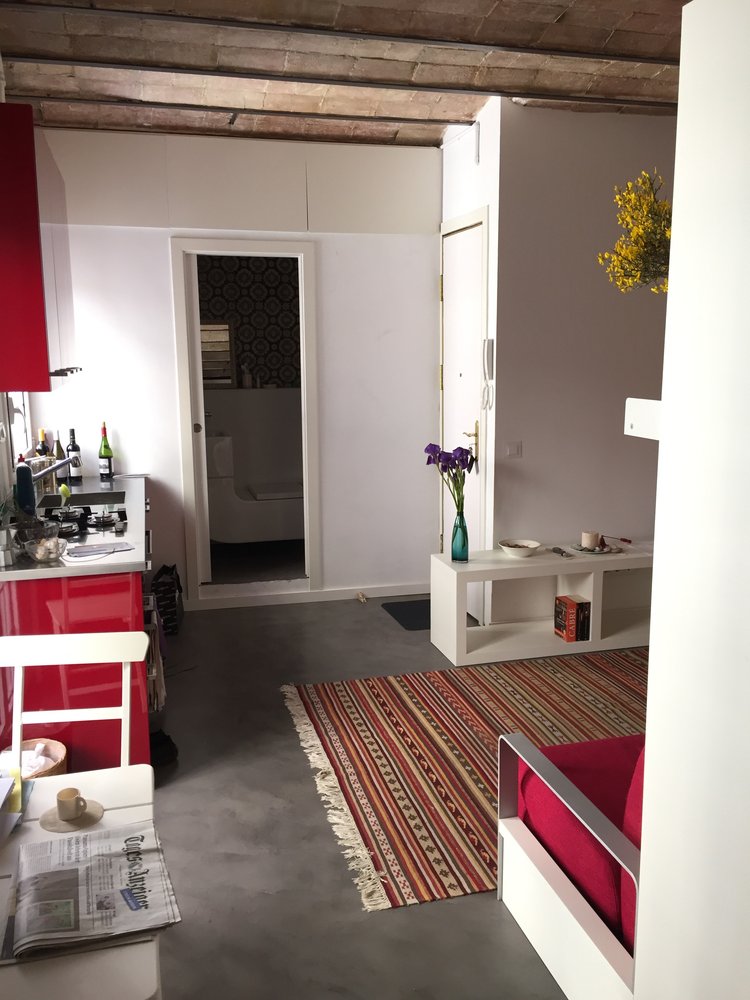
Through a joint project between my chair and the Universitat Autònoma de Barcelona (UAB), I was looking for a place to stay in the city for a semester. Due to the crisis, rents were high. Unexpectedly, I was able to buy an old fisherman's apartment. The narrow, steep staircase was no longer manageable for him. He had lived with his family of four in this small 2.5-room apartment for many years. At first, I lived in his blue-walled apartment with its low aluminum ceiling, built-in halogen lights, and large floor tiles.
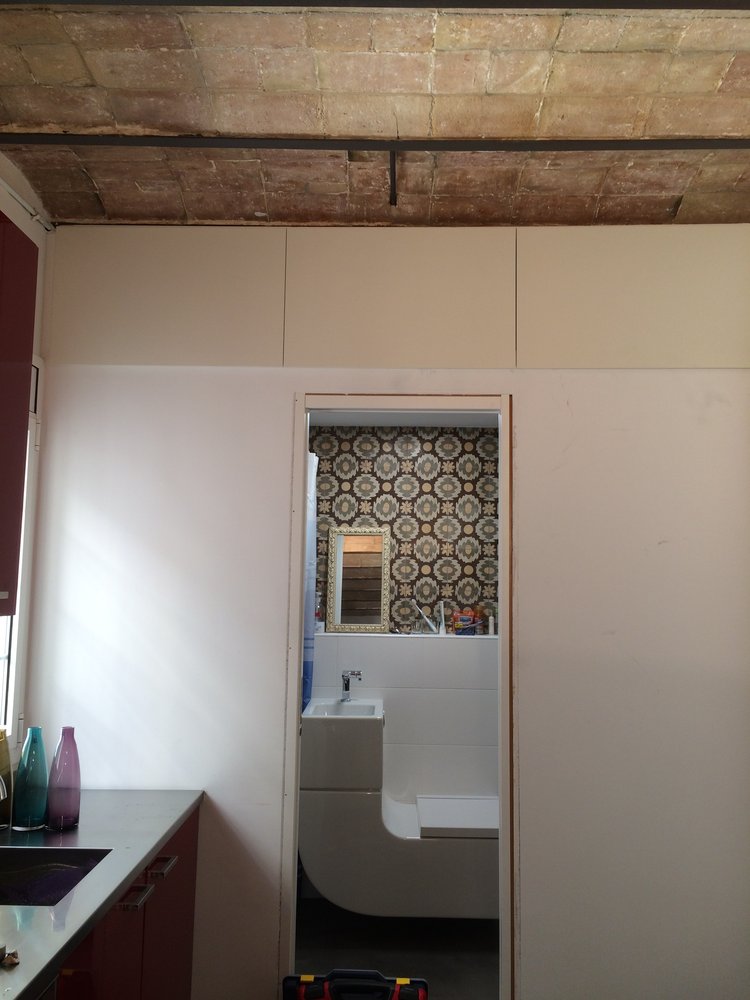
I met Arturo at the El Xiringo restaurant, which was run by Xavi at the time. When I realized that he was an engineer with his own small construction company, we began to make plans. Arturo had already anticipated the surprises during the renovation. This allowed us to carefully restore the original building structure. Here, for example, you can see the original ceiling structure with the typical voltas catalanas.
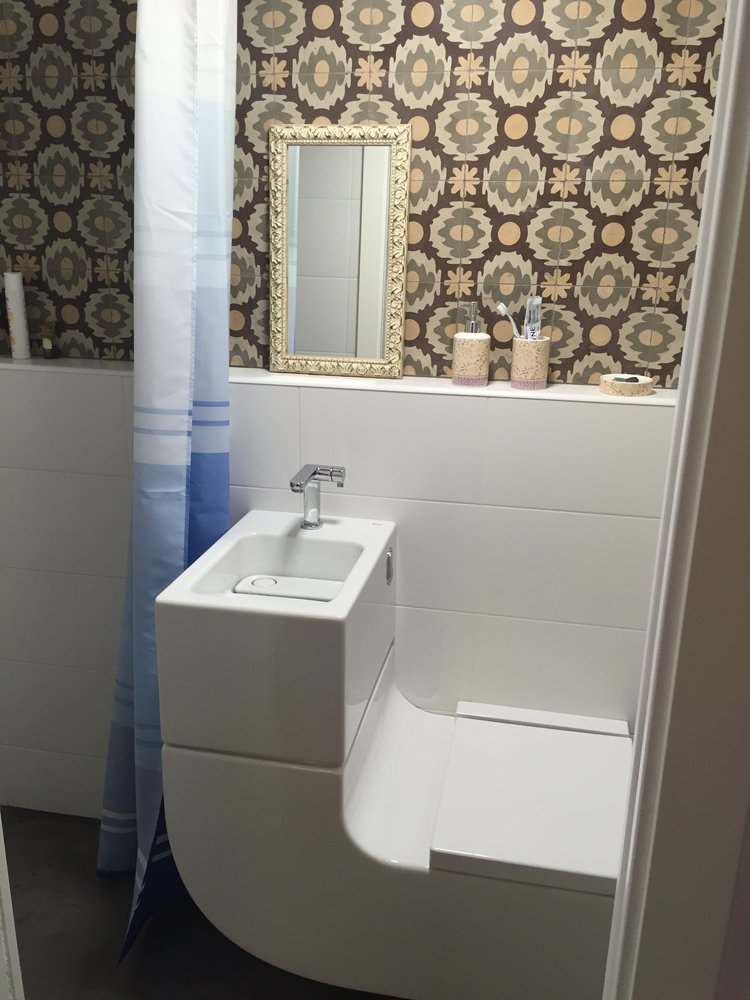
Old floor tiles, known as hydraulics, were hidden under a classic tile floor. Here used one of the patterns for the wall in the wet room. Now the tiles form an interesting contrast with the pioneering water-saving Roca recycling toilet. The Italian sofa bed had to be brought into the apartment via the small balcony. To do this, Arturo and his team removed the railing and welded it back on again.
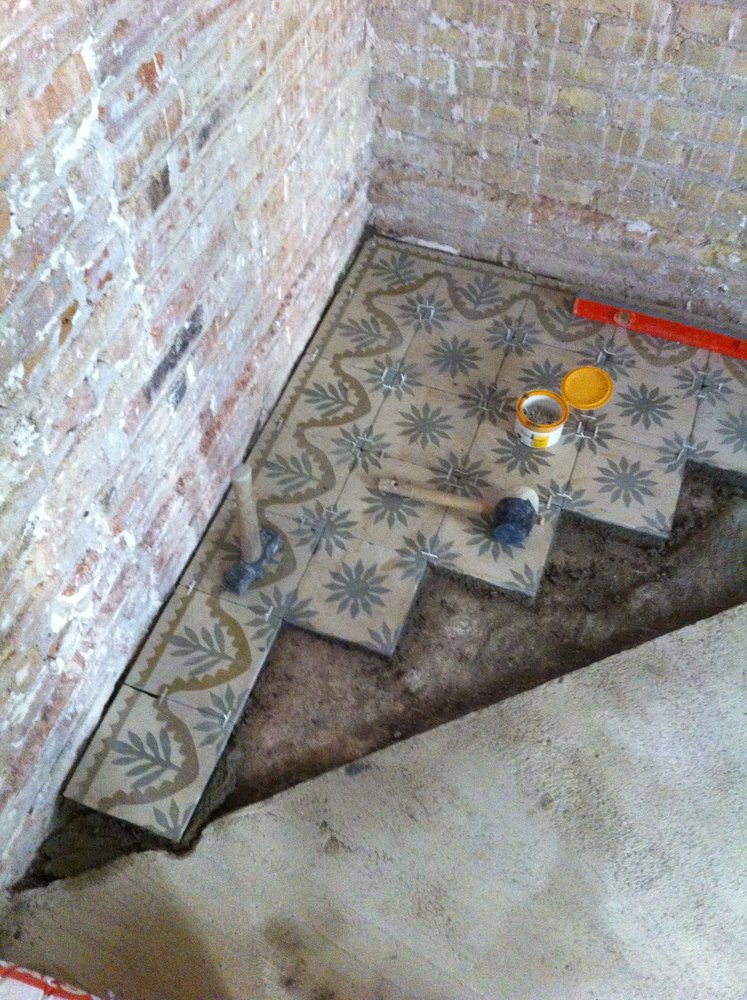
We have hidden a fragment of beautiful original hydraulic tiles from the small bedroom. Here is a photo taken during the renovation phase. You might only find them at the very end, when the floors are being laid ;-)
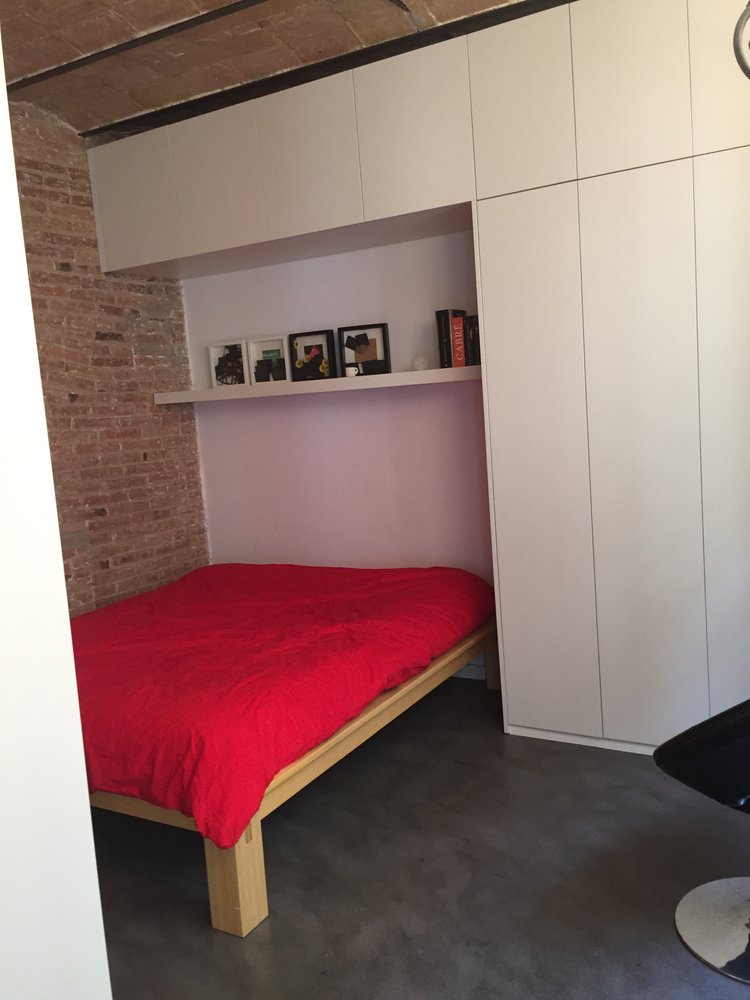
The remaining floor was filled with several layers of mineral microcement without any joints. The cabinets and kitchen were custom-made by Arturo. The design concept was developed in collaboration with Catalan-Argentinian architect Mariona Oliver Pujol.
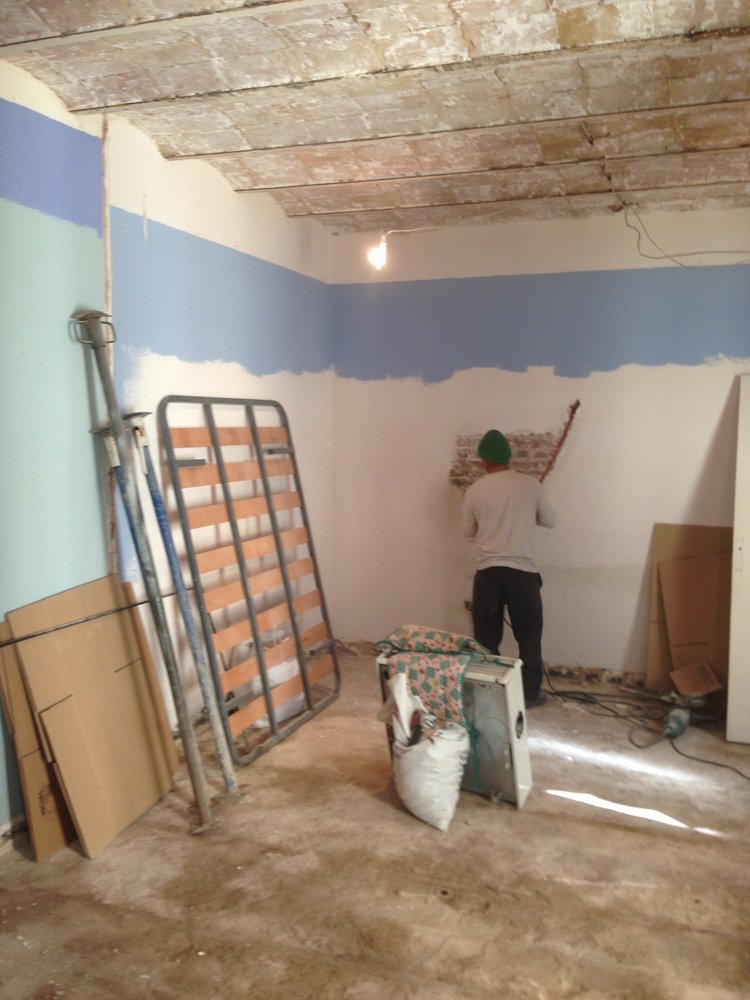
In addition to the floor and the original voltas catalanas on the ceiling, the original brick wall was also uncovered from behind several layers of paint. This wall has a special significance, and the small bricked-up passageway that is still visible gives rise to much speculation.
Although still young compared to the rest of Ciutat Vella and especially Barri Gotic, the former fishing district of Barcelonata is of great historical and architectural interest. The first houses were built around 1750, when the military ciutadella was constructed in the former La Ribera district and the population living there had to be resettled. The old walls, streets, and cellars of a part of La Ribera—and the brutal history of the decline of the Catalan Republik—can be admired in the Museum 1714 in the El Born district.
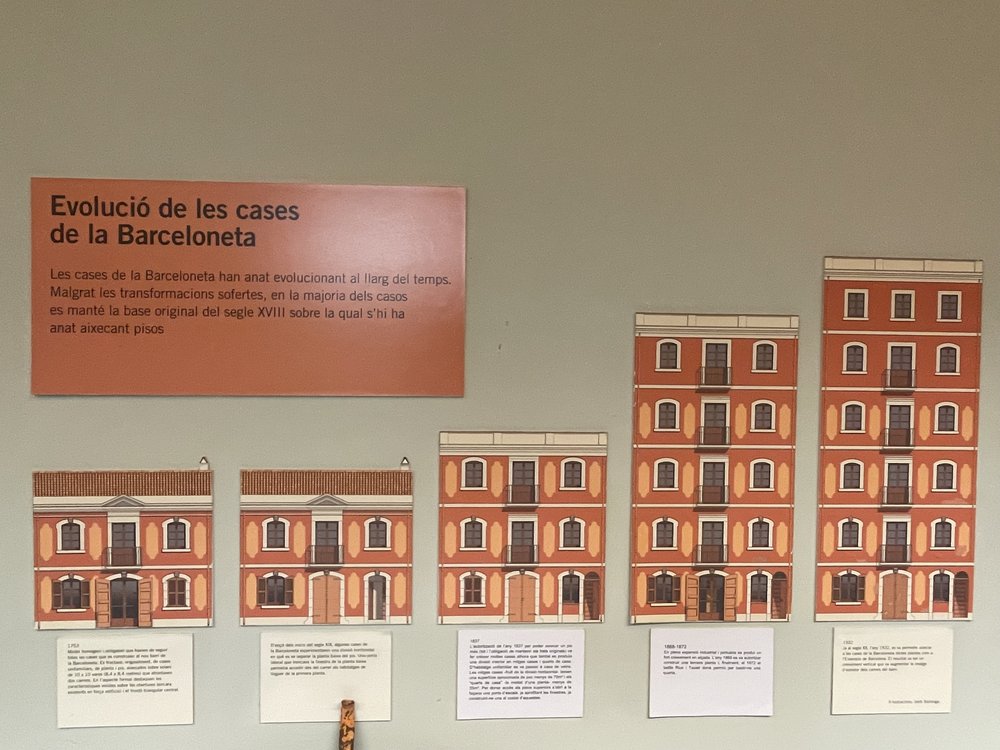
A walk through Barceloneta today still clearly shows that the two-story houses were built in a grid pattern. The ground floor of each 70 m² row house contained a small workshop, with the apartment above it accessible via an internal staircase. Later, a separate entrance was added to the upper floor. In the next phase, a second floor was built. A narrow door with a narrow staircase now provides access to the apartments. It was not structurally possible to build any higher. Therefore, in the next step, a load-bearing wall was erected along the alley in the middle of the building. The area of the apartments was halved to approx. 35 m² and the stability was now sufficient to build up to six stories high. Many of the details mentioned above can be seen when studying the facades of the houses. The museum Casa de la Barceloneta 1761 is located in one of the few houses that still has two floors.